Orthorexia
What is that? Apparently it’s something. One of the readers of this blog sent me some info on it, wondering if it might be an interesting thing or possibly, possibly a real one.
Orthorexia is when someone is obsessed with eating healthy foods, often to the point of self-harm. It’s not a medically recognized term, but Wikipedia is all over it, of course.
OK, our culture wants to medicalize and pathologize (I’m getting red squiggly lines for both of those words as I type this. Get with the picture, Word!) everything in the world. I don’t know anyone who can’t recite at least one Greek-based term for something that’s wrong with them. I have scoliosis (as you know from the yoga post) and anemia, myself. Wait, neither of those is from the Latin, right? I probably also have several things relating to my tendency to nod enthusiastically when other people speak, my abnormally acute interest in little summer dresses, and my inability to stop cutting my hair.
Naming things often gives them meaning. But some things have meaning even before someone tags a fancy title on them.
And I have definitely noticed an uptick in the number of people around me who have become extremely concerned with healthy eating. I haven’t seen anyone die of it yet. No one’s been hauled off to a clinic. But people have lost a lot of weight. So much, sometimes, that they don’t look healthy at all. So much, sometimes, that their tendons begin to stand out, and their veins pop along the surface of their skin, and they looked stretched and anxious. They are eating, they are just eating healthy, they insist. They have discovered the perfect diet. Not diet as in dieting, diet as in way of life.
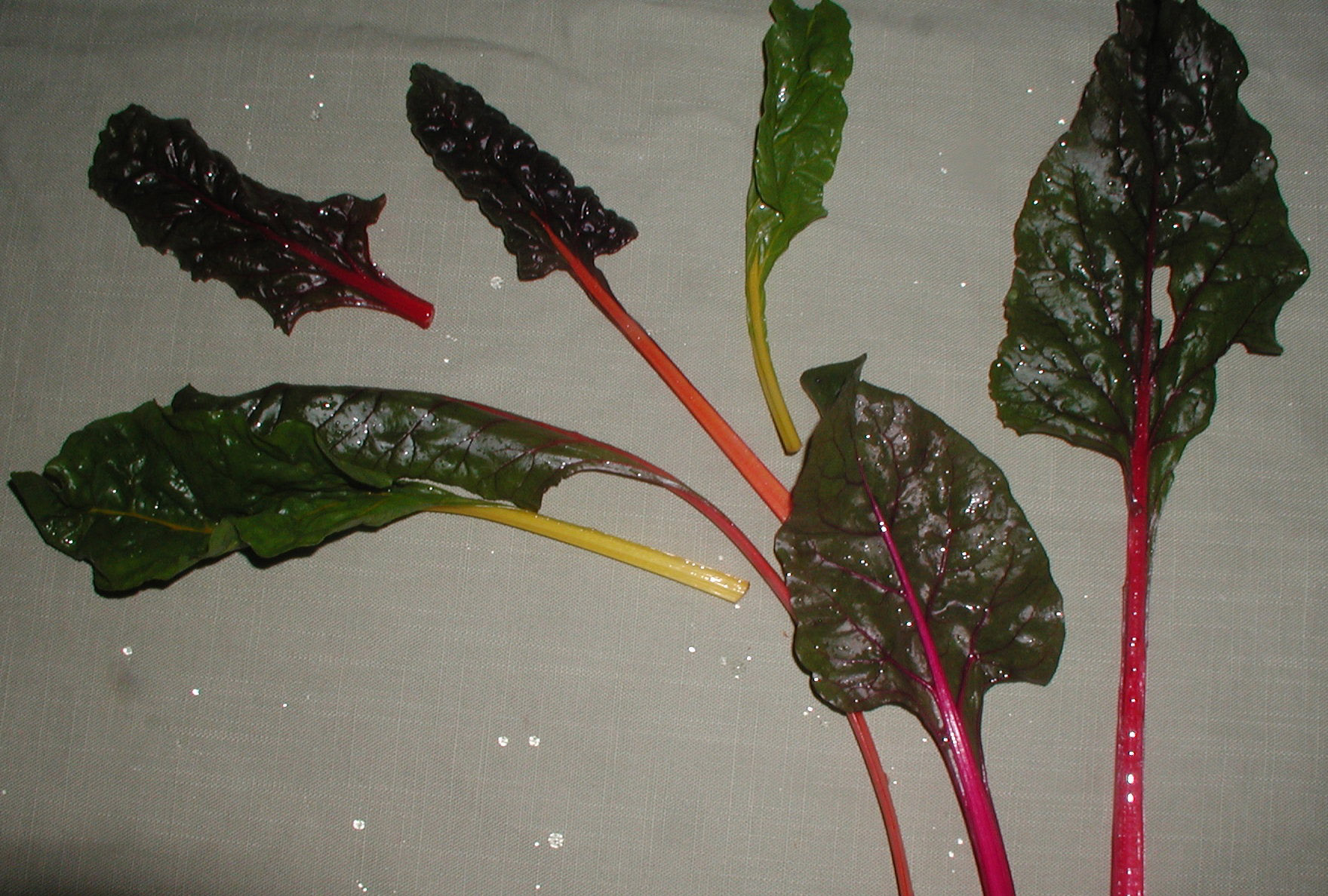
Do we really need a different name for this? Isn’t this just another form of staving yourself? Maybe people who feel desperately compelled to be incredibly thin will often find a socially sanctioned way to get there. What could be wrong with only eating organic produce? That’s not a disorder, that’s just living in Park Slope. How convenient, to be able to explain to your friends that you’ve mastered nutrition. It’s really, really important, after all, to pay attention to what you put in your body.
So I can’t say that I always agree with giving everything a scary-sounding new name. But I can definitely say that some of the things that orthorexia is about are things I have seen. And that is something worth paying attention to.
* * *
Unroast: Today I love love love the way I look in jeans, boots, and a tunic shirt. Fall!! Yes!!
P.S. A version of this post is up on the Huffington Post here.
Kate on September 8th 2011 in Uncategorized
Dee responded on 08 Sep 2011 at 1:36 pm #
hmmmm the root of anorexia is a greek word meaning without appetite so wouldn’t orthorexia really be without healthful eating?
Deanna responded on 08 Sep 2011 at 1:54 pm #
Another pet peeve of mine. I never used to eat healthy at all and thought people who were obsessed with Not eating this or Not eating that were strange. Between us, I also thought Vegans were weird. I was also very underweight and needed to gain so I ate everything: potato chips, milkshakes, candy bars…you name it.
I ended up with high cholesterol and recently high glucose levels. I had to cut back on carbs and processed foods (and even wine which broke my heart). I still cheat…I eat bread more than I should and I even eat pizza at times, but I’ve been very good about sweets. I figure something has to kill me anyway and I refuse to eat completely healthy.
I agree that people who eat ‘too healthy’ look like they are missing something. I went to a vegan restaurant recently and thought everyone looked like they could use a hamburger or a big slice of chocolate cake..but that’s mean. The food was really good there and it’s fun to eat healthy whenever possible.
I met a woman who had a young boy about the same age as my daughter who was 2. She was a hippy type…refused to let her son eat any sweets or anything unhealthy. I was convinced the kid would end up eating all sorts of bad stuff when he grew up. He’s now about 20…I wonder how that turned out.
Whitney responded on 08 Sep 2011 at 2:12 pm #
Though this may not be a medically recognized term (yet), my dear “twin” cousin (we’re the same age) suffers from this. She can only eat specific things that are prepared in a specific way. I view it as restriction and, because she’s a recovering anorexic, worry about it. Sometimes I feel like the wealth of “information” about this/that/health/health/do/don’t/ etc. that surrounds food and the choices we have when it comes to consuming is enabling her to legitimize or explain away her lifestyle.
I worry about her, especially because she has taken up running — perhaps this is misplaced guilt on my part, because she’s told me that I inspired her to start running, as I run quite a bit. But I’m honestly afraid that she’s going to fall over and have a serious problem in the middle of a run or a race because of not properly fueling herself. 🙁
Kate responded on 08 Sep 2011 at 2:14 pm #
@Whitney
I’m really sorry to hear about your cousin! Can you find a way to talk to her about this? I never know how helpful that might be, but I don’t know what else to tell you.
And I agree with your hunch about the legitimization. I’ve thought that, too, about some people.
Meow responded on 08 Sep 2011 at 4:02 pm #
Oh, Deanna. I was raised by “hippie types”. I grew up on an organic farm, at all local before it was cool, didn’t eat processed foods, etc. I don’t have a sweet tooth, I don’t dig processed foods. I don’t go out and binge on Doritoes or whatever. I never developed that palatte. People won’t die if they don’t eat shitty foods. It’s just (god, this is going to sound tiresom) the industirial food complex creating cravings for things so they can sell products. You say healthy like it’s a bad thing. Trust me, it’s delicious.
Kate responded on 08 Sep 2011 at 4:11 pm #
@Meow and Deanna
Healthy is sometimes delicious, and sometimes less so. Like unhealthy. Anyway, it’s not always clear where each of those categories begin and end.
I grew up like you, Meow, and when I went to college I really did binge on processed foods. And now I don’t crave them so much anymore. But my diet is a lot more mixed than it was growing up.
San D responded on 08 Sep 2011 at 4:42 pm #
There is much more to eating than “healthy” vs “unhealthy”. Throw in culture, genetics, psychology, ease, and taste for, example. Your “head” plays a big part, I think. If only it were as easy as “this is good for you, eat it, and don’t eat this”, man, would I be in great shape!
Deanna responded on 08 Sep 2011 at 6:08 pm #
There was a 60 Minutes episode a few years ago (I think it was that show) about these people who eat very low calorie diets as a way of life. I don’t remember how much it was but about 1/3 of what most of us eat each day.
They said they felt great and they thought they looked great. There was one woman who I thought to be well into her 70s and they asked her how old she was. She said 50 and then ‘I know I look great for 50’ and I thought…geez…she looks so much older.
I do think there is such a thing as too thin. I have been too thin and that’s why eating in a restricted way as I have to now is hard for me. I don’t want to lose weight. you’d be totally amazed at how many people find this really hard to believe.
Laurie S. responded on 08 Sep 2011 at 8:48 pm #
Kate, I’m glad that you found this interesting enough to post about! I thought it was eerily relevant. I’ve begun to notice an “uptick” in the amount of people I’m acquainted with who seem to be obsessed with perfect nutrition despite appearing decidedly unhealthy.
It’s true, as one of your commenters said above, that eating healthy is “delicious.” But, that’s the thing… you have to EAT it in order for it to be healthy. And, eat the right amount.
From what I’ve seen, orthorexics tend to let the perfect be the enemy of the good. As sad as it is, America’s industrialized food structure is fairly pervasive. If you don’t live on a compound where you grow your own food, sometimes you must bow to Food Inc and eat the farmed fish served up in a restaurant. It’s difficult to have a proper social life and only eat grass-fed beef and organic carrots. Some manage. Others develop neuroses.
Yan responded on 08 Sep 2011 at 9:00 pm #
@Deanna — I think it’s something like 900 calories a day, which is less than we give prisoners and is, I think, forbidden by the Geneva convention as “starvation.”
It’s hard to see some people negatively obsessed with food, so concerned with eating the “right” things that they do not seem to enjoy food itself — only the idea of the organic or local or “healthy”-ness of it. I don’t know if you can put a label on it (well, actually, of course you can, but I don’t know that it’s classifiable as a disease), but it is symptomatic of our culture’s unease with food, with bodies, with weight, with health, with feeding ourselves.
I forget which amazing body acceptance blog I read it on, or it may be my own formulation of all the wisdom out here, but whenever I find myself obsessed with my own food issues or food choices or food in general, I try to remember that food is a key part of life, and I should eat things that make me feel good.
I can be mindful of the food I am choosing and eating. I can pay attention to how the foods I eat make me feel. And I can do it without being obsessed about the “right” choices by someone else’s standards — and do what is right for me today, what feels good. Some days that’s tuna salad and potato chips, and some days it’s organic kale salad.
Barbra responded on 09 Sep 2011 at 11:44 am #
This describes my grandfather perfectly. I always thought of his as having “disordered eating,” although it definitely wasn’t anorexia. He ate enough, but he had an unhealthy obsession (and I mean obsession clinically) with eating super healthy and just the right amounts of everything. For example, he took pride in counting the exact number of peanuts he was eating (not just taking a small handful). He also would never eat anything unhealthy or “cheat.” Even though this behavior may have helped him live longer, I think that the obsessive thoughts and anxiety around eating robbed him from some quality of life.
Stephanie responded on 09 Sep 2011 at 4:17 pm #
Orthorexia is a very interesting topic… and as other readers said, it’s challenging because there is such a varied understanding of “healthy” vs. “unhealthy”. I think much of what contributes to the disorders like these is the amount of thought that goes into maintaining the diet and how upsetting it is if they cannot do so for whatever reason.
If you eat enough to get enough nutrients and calories, and your life is not driven by an obsession with food, then I don’t think anyone should pop-diagnosis you with orthorexia. However, if you completely freak out and refuse to eat because you are stuck in an airport and there is no food that meet your definition of “healthy” then you might have some issues. Other elements to consider include things like if you decline social occasions often due to concerns about food, or have irrational fears and anxieties. The emotional aspect would have to drive the diagnosis, after a basic review of whether the diet is sufficient.
As I write this, I’m thinking it’s a little rough on the food allergy world and celiac patients (speaking of anemia) to have to deal with the issue of orthorexia. We’re often accused of over-reacting or making up issues to avoid foods or food-based occasions, and it gets frustrating to have to justify yourself over and over again. Let me plaster my bloodwork to forehead! See, can’t eat it! How much worse would it be if you started get psych referals too?
Val responded on 10 Sep 2011 at 1:23 am #
Yesterday the tv was on some morning program and a lady was talking about what size portions are appropriate.
That’s all well and good, except the caller was asking about her husband, and the portions this lady described were more appropriate to a child.
No grown man could live on so little food–it was about what my 85 pound 11 year old typically eats.
And I was also concerned about the lady. She was scrawny like chicken wings. I had that bird look too as a teenager, however this lady was older than me, well into her 50s.
That’s not right.
How can anyone trust her to know how much food a person requires when she’s obviously deliberately underfeeding herself?
I think if you can visibly see ribs between the collar bones and breasts? That’s the dividing line. Quit dieting, for heaven sakes.
Then they’ll want to talk about how fit they are. So what you can run 50 miles? You’ll live forever then? Or die suddenly along the road, so you won’t ever end up with a lingering illness?
What’s the goal here? The purpose?
You can see I do not get it. Yeah, don’t be irresponsible and wreck your body, but please do live in it, and enjoy it, and be happy and please eat when you are hungry.
This was a wake up call to me: When my oldest kids were born, we were supposed to start them on solid food at two weeks. Two weeks cereal, four weeks fruit, six weeks vegetables, eight weeks meat, blah, blah, blah. And I doggedly poked these foods into their tiny mouths, trying to be a good mother. They were darling, thrived.
Then a few years later when their sister was born, it was no food at all for 5 months, only milk. She seemed as fine as ever.
Later they extended that more, but by then I did whatever seemed right at the time. Those kids also grew, were cute, clever, healthy.
Somewhere in there I had a conversation with my great grandma. She told me they fed the babies graham crackers soaked in milk at about 7 or 8 months, as a first food.
That’s when I realized as long as you feed the baby something, a lot of ways can work just fine. (My grandpa and all his brothers were all grown men, doing fine.)
I guess my point is pointless.
love, Val
Stephanie responded on 11 Sep 2011 at 2:59 am #
Yeah, the calorie restriction can be quite problematic. There have been a few clinical studies and they have to do things like kick people out because they are losing too much bone density.
The standard format is eating something like 80% of the calories that would be “normal.” Normal, of course, is pretty variable from person to person. It’s hard to maintain over time, of course, and people do lose a good bit of weight and end up very much on the thin side. They also have to restrict activity, which seems foolish.
Right, sorry about the tangent. But yes, babies tend to okay as long as they are fed clean food they can digest. They do a bit better if fed breastmilk for 3-6 months… but formula works quite well. Solids, more choking hazard, but my dad first fed me a pickle at 6 weeks because he couldn’t stand to not share. My mother was horrified, and I am very fond of pickles.
Emily responded on 11 Sep 2011 at 5:23 pm #
i think orthorexia, like exercise bulimia, is so hard to wrap our heads around because it centers around behaviors that are encouraged and rewarded: eating healthy, low-calorie, etc., or exercising religiously with extreme discipline. it’s so hard for any other person to know where the line is for someone else. does the person feel good and balanced and able to concentrate on other things, or has the obsession taken over their mind, making them unable to function if they don’t work out or if they eat some processed food or something with lots of simple carbs?
i know for me i am able to stay on the healthy side of that line some of the time, but when i’m under a lot of stress, i can spin effortlessly into the obsessive side, suddenly unable to do any work because i’m thinking about working out, or how my glucose must be spiking because i had a banana WITH another carb item like cereal and milk, or how i need to make a calorie plan for the week with specific workouts, variations in metabolic rate, and meals to make sure i don’t ingest too much on any given day. no one in my life even knows when i have entered this obsessive prison, because i don’t talk about it. i only experience more emotional anguish and stress until i can somehow get ahold of it again. most people in my life applaud my dedication and express how i make them feel so lazy, or some similar sentiment.
i frequently wonder if my whole life will be spent in this prison of self-loathing, as i have always thought of it.
Val responded on 12 Sep 2011 at 1:48 am #
Oh Emily, it’s just an attempt to control SOMETHING when everything else feels out of control.
I don’t get into bananas and cereal and exercise, but I start cleaning the house.
When I’m yelling about too many shoes in the doorway (like 7-9 people live here, that’s potentially a lot of shoes, and a lot of glasses and pop cans sitting aroooouuund, aaaaagh.) everyone knows I’m freaking out–having a MOMENT.
It’s okay. No need to loathe, just understand the message. Listen to yourself, and think about what’s really going on. For me, this is so not about shoes or kleenex on the coffee table, and for you not about a brownie you ate yesterday at a party.
It’s okay to be human. We all are. love, Val
Rachel Stone responded on 19 Sep 2011 at 1:56 pm #
I’m delighted by this post!
My dad has Actual Celiac Disease which means he Can’t Eat Gluten or He’ll Die, and we’ve both been amused/concerned by the recent trend of going gluten-free as a “lifestyle choice” or as part of the Paleo diet.
To me it seems like going gluten-free can be a polite sounding way of masking an eating disorder. I know, because I’ve done it. I was gluten-free for 7 years before I realized there was no reason for not eating gluten except that I felt safer with so much food excluded from the realm of what I could eat.
jss responded on 20 Sep 2011 at 10:20 am #
“Do we really need a different name for this?”
Yes, at least in that it can, in some cases, do a better job of describing someone’s difficulty than, say, a diagnosis of anorexia nervosa can. Orthorexia, in a pure form, is ONLY an obsession with eating the “right” foods, whatever that means to a person. It often starts with a person cutting out one or two foods, then three or four, then…until the number of “right” foods is down to almost zero. Often, what happens is that the “right” foods that are ultimately left are so low in calories that, even if the person IS inclined to eat a normal, 2000 calorie a day (or whatever) diet, it is almost impossible to do so. Imagine how many pounds of, say, collard greens you would have to eat to get a day’s worth of calories…
So, what happens is that orthorexics can end up LOOKING a whole lot like anorexics, but the difference would be significant for the mental health professional treating the person. Why? Because nothing about orthorexia implies that a person has even the slightest concern about weight, shape, or body image. The person CAN have this concern, in which case the person would be both orthorexic AND anorexic, but in this case – I agree – the add-on label of “orthorexia” is pretty useless: I would guess that most anorexics have an obsession with eating the “right” foods but “orthorexia” adds almost no information to their diagnosis, because the “right” foods they have chosen were chosen specifically to facilitate weight loss.
When “orthorexia” actually means something is when the person has no accompanying body image disturbance or desire to lose weight. This person may have a body that is identical to an anorexic’s, but her psychopathology is something much closer to obsessive-compulsive disorder or a phobic condition than it is to anorexia nervosa.
So, in a nutshell, medical treatment would be identical for people with anorexia nervosa and orthorexia (if it resulted in severe weight loss), but psychological treatment would address different things in each case. A “different name” is useful, but admittedly only to the sufferers and those treating them.
jss responded on 20 Sep 2011 at 1:05 pm #
Blech…I just reread my post and it sounds so horribly pedantic that I feel like I should explain what my angle is. I was in and out of outpatient/inpatient/residential treatment for anorexia for about a decade but never suffered from anything vaguely “orthorexic.” In fact, at my worst, I was eating about 500 calories a day…of Skittles. And it wasn’t because I thought Skittles were the “right” food, but because I was absolutely obsessed with weight loss, having the “perfect” body, etc. I ate Skittles because I loved Skittles (and they raised my blood sugar enough that they would often keep me from passing out) and didn’t want to waste the few calories I was going to allow myself on anything other than what I loved. But my experiences in treatment led to my meeting a few people who didn’t care at all about weight loss or aesthetic perfection, but had become so obsessed with eating only the healthiest foods that it had all gone awry and they had become horribly emaciated. (These people were usually diagnosed with anorexia nervosa, because insurance companies will cover treatment for that, while orthorexia is not even a clinically recognized term.) Their struggles toward wellness were completely different from mine and they often felt out of place on eating disorder units that were obsessed with teaching us to accept/love our bodies. So, that’s why I care enough to post about this at all, if that makes sense.
Kate responded on 20 Sep 2011 at 1:09 pm #
@jss
I thought your original comment was helpful and interesting, but also appreciate learning where you’re coming from. Thank you for the insight, and I’m sorry for what you went through!! And I can’t believe you chose Skittles… 🙂
jss responded on 20 Sep 2011 at 1:58 pm #
I’m glad it was helpful, Kate. In retrospect, I can’t believe I chose Skittles, either. You know how some people have a food they can’t eat because, once upon a time, it gave them food poisoning? That’s how I feel about Skittles now. 🙂
Kate responded on 20 Sep 2011 at 2:17 pm #
@jss
Good! No more Skittles for you! I’m glad you’re healthy now (is that the right assumption? or am I being callous and unaware? I never know the right thing to say).
And none of this is to say you shouldn’t have candy, of course. Especially with Halloween coming up 🙂
jss responded on 20 Sep 2011 at 2:46 pm #
I am excited about Halloween, although I’d go for chocolate now. 🙂
And, yes, you can totally say that I am “healthy” now. I have dealt with the issues that set me off on this vain-sounding enterprise in the first place. My weight is normal. There is nothing that I will not eat (except Skittles). I do not exactly have a love affair with my “healthy” body, but I doubt that I have more issues with it at this point than the women who comment on your blog who have never had a diagnosable eating disorder. Your last comment made me feel good, in fact, because, why shouldn’t I be proud of something I worked my ass off (on, really) to achieve?
I wish I did not have to insert a caveat here, but I do, I suppose, if I am going to represent all people who are in recovery from anorexia. Some people in recovery from this disorder hear, “Geez…you’ve gotten fat” when a well-meaning person says, “You are/look so much better/healthier.” It’s not something I personally deal with (any more), but it’s something that you should be aware of if a person is in (an early stage of) recovery and you do not wish to be misunderstood. The safest thing you can do, I guess, if you meet someone in recovery would be to not mention anything about her health – dammit! I wish that were not true – although, if you know this person well, you may be able to pick up on contextual clues that indicate that she will consider this “okay,” or even complimentary.
And, now, I’ve probably confused you more…
Kate responded on 20 Sep 2011 at 2:56 pm #
It is far from vain. And you should be proud of yourself! That’s a huge accomplishment. I mean, I’m proud of myself for making progress on feeling good about my body, and I didn’t go through something nearly as difficult as what you had to.
I always appreciate advice/information, especially on sensitive subjects like this one, that make me more likely to make a fool of myself and hurt people’s feelings.
And now I’m going to send you a personal email, because I have to rant about something off-blog 🙂
Gigantic Productions responded on 30 Sep 2011 at 11:13 am #
Gigantic Productions is casting for a nationally televised documentary on young people who are obsessed with eating healthy or “pure.”
Are you constantly worried about what you can eat and what is in your food? Do you think most foods are dangerous to your health? Are you afraid to eat food that isn’t raw, organic, unprocessed or local? Or maybe you read food labels obsessively and avoid foods with fats, preservatives, additives and animal products. Has this compulsion led you to shed weight, feel weak and suffer panic attacks or severe anxiety? Do you refuse to eat at restaurants or friends’ houses? Are you isolating yourself from friends and family to hide your obsession?
If you’ve taken a healthy diet too far, you may be eligible to appear in a nationally-television documentary on a major channel. If this sounds like you and you appear to be between the ages of 16 and 24, email us at casting@gigantic.tv and tell us your story. Please include your name, location, phone number, email and a recent photo of yourself.
orthorexia | Bulimia Therapy responded on 15 Nov 2011 at 9:53 pm #
[…] Eat the Damn Cake » Orthorexia What is that? Apparently it's something. One of the readers of this blog sent me some info on it, wondering if it might be an interesting thing or possibly, possibly a real one. Orthorexia is when someone is obsessed with eating …http://www.eatthedamncake.com/ .. […]